ABLE Accounts for New Hampshire Families: A Parent's Guide
Free Printables Pack
Get the free Printables Pack and our weekly newsletter for autistic kids, teens and adults and their families.
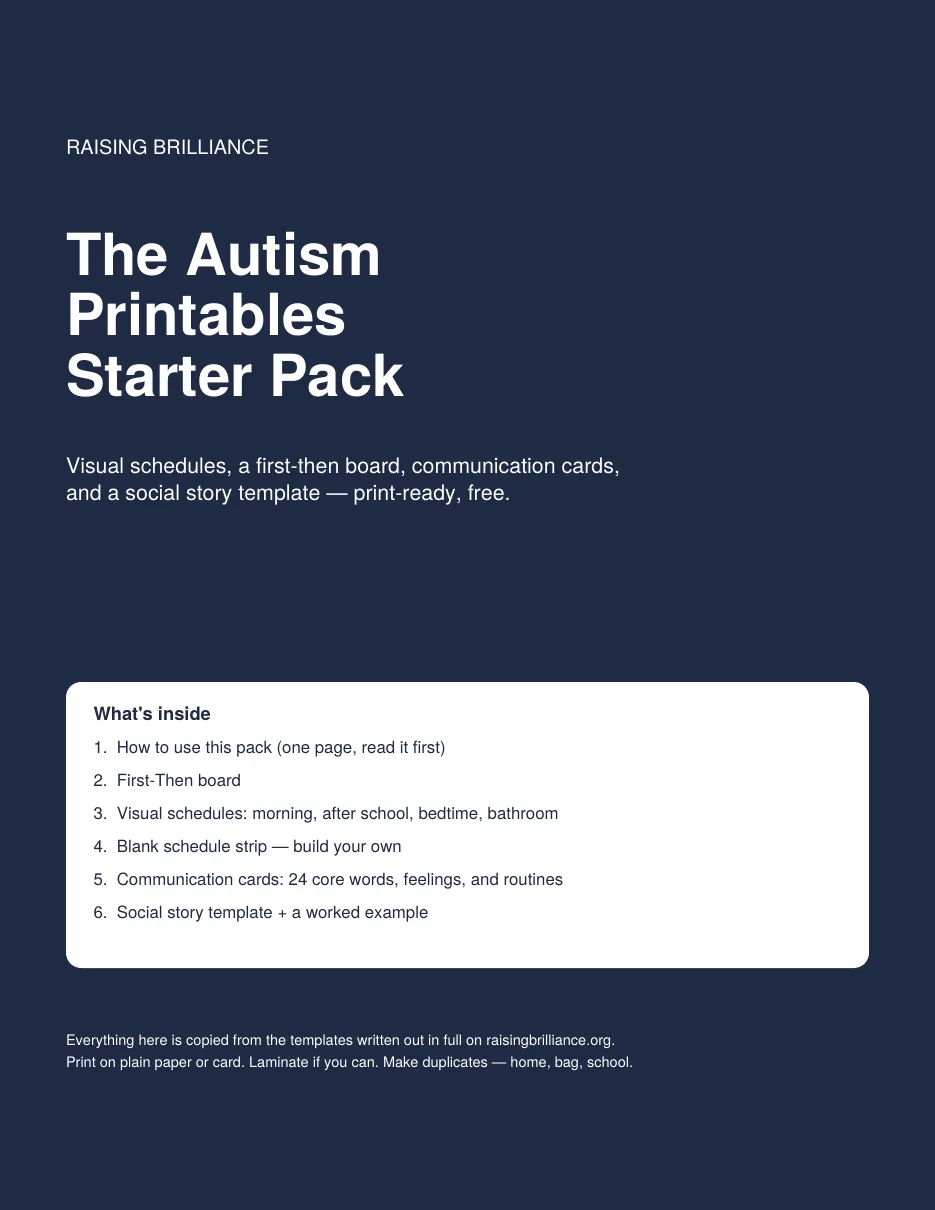
The Autism Printables Starter Pack — free PDF, downloaded instantly.
No spam. Unsubscribe any time.
New Hampshire families can open an ABLE account through NH ABLE Plan, administered by the State Treasurer of New Hampshire, with Ascensus College Savings Recordkeeping Services as program manager. It lets an autistic child or adult save and invest without losing SSI or Medicaid.
Quick facts
- Program: NH ABLE Plan
- State account limit: $650,580 total
- 2026 contribution limit: $20,000 a year from all sources combined, plus ABLE to Work deposits
- New Hampshire tax treatment: none needed; New Hampshire has no state income tax
- SSI protection: the first $100,000 does not count toward SSI's resource limit
- New in 2026: eligibility covers anyone whose disability began before age 46
About NH ABLE Plan
NH ABLE Plan offers 8 investment options: 7 asset allocation options, from aggressive to conservative, plus an FDIC-insured checking option. The investment managers are BlackRock, Capital Group, Fifth Third Bank, Schwab and Vanguard. The program was set up under New Hampshire RSA § 195-K.
Fees and features
- Annual account fee: $56 a year, or $31 with electronic delivery, charged quarterly
- Debit card: comes with the FDIC-insured checking option at Fifth Third Bank. The $2.00 monthly fee is waived with electronic statements or an average monthly balance of at least $250
- Minimum to open: as little as $1
- Holding period: contributions to the checking option can be withdrawn six business days after the plan receives them
- Customer service: 888-609-3263, Monday to Friday, 8:00 a.m. to 5:00 p.m. ET
What the NH ABLE Plan site says
- Annual asset-based fees run from 0.28% to 0.34%, depending on the investment option
- You can start with as little as $1, and gifts can be made through Ugift
- The account balance limit is $650,580, effective January 1, 2026, per the plan's April 2026 supplement
Source: NH ABLE Plan April 2026 supplement, checked November 2, 2026.
How ABLE accounts work
An ABLE account is a federally authorized savings and investment account for people whose disability began before a set age. Starting January 1, 2026, that age is 46, up from 26. Eligibility comes through SSI or SSDI, or through a disability certification, which is self-certified at enrollment. Earnings grow tax-free, qualified withdrawals are tax-free, and the balance is protected for most means-tested benefits. Each person can have one ABLE account, and anyone can contribute to it. For the full background, see our complete ABLE accounts guide.
ABLE to Work: extra deposits for working adults
If the account owner has a job and isn't contributing to a workplace retirement plan such as a 401(k), 403(b) or 457, they can deposit more than the $20,000 annual limit. The extra amount is their earnings for the year or the prior year's one-person federal poverty line, whichever is less. For 2026, that is up to $15,960 for New Hampshire residents.
What you can pay for
Qualified disability expenses cover anything that supports health, independence or quality of life. That includes therapy costs insurance doesn't pay, AAC devices, education, housing, transportation, sensory equipment, personal support and respite care. Withdrawals for anything else are taxed, with a 10% penalty on the earnings portion. Our ABLE eligible expenses guide has more examples. If you're weighing an ABLE account against a trust, see ABLE account or special needs trust?
New Hampshire taxes
New Hampshire does not have a state income tax, so there's no state deduction to claim. The federal benefits apply in every state: investments grow tax-free, qualified withdrawals are tax-free, and an account owner aged 18 or older who contributes to their own ABLE account may qualify for the federal Saver's Credit, on up to $2,000 of contributions ($4,000 married filing jointly), according to the IRS.
Protecting SSI and Medicaid
SSI ignores the first $100,000 in an ABLE account. Above that amount, SSI cash payments are suspended, not ended, until the balance drops back below $100,000. Medicaid continues at any ABLE balance, as long as the person remains otherwise eligible. Account owners must recertify their ABLE eligibility every year. Under federal ABLE rules, when the account owner dies, the state Medicaid program may claim repayment for Medicaid costs paid after the account was opened. Qualified expenses that are still owed, including funeral costs, are paid first.
New Hampshire Medicaid waivers and ABLE
New Hampshire has a Developmental Disabilities (DD) Waiver and an In-Home Supports (IHS) Waiver for children with developmental disabilities who live with their families. The IHS waiver was renewed for January 1, 2026 through December 31, 2030. (NH Department of Health and Human Services)
General information, not tax or legal advice. Confirm current details with the plan before you open an account.
Related guides
Frequently asked questions
Related guides
ABLE Account vs. Special Needs Trust: Which Does Your Family Need?
They solve different problems — and most autism families eventually use both. Here's how to decide what to set up first.
ABLE Accounts for Autism Families: The Complete Guide
What an ABLE account is, who qualifies after the 2026 expansion, what it can pay for, and how to pick your state's plan.
ABLE Accounts for Hawaii Families: A Parent's Guide
How Hawaii families can save for an autistic child's future without risking SSI or Med-QUEST.
ABLE Accounts for Idaho Families: A Parent's Guide
Idaho has no state ABLE program — here's how Idaho families open one anyway, at partner-state rates.
ABLE Accounts for North Dakota Families: A Parent's Guide
North Dakota has no state ABLE program — here's how ND families open one anyway.
Find this near you
Browse local autism resources by topic and find providers and programs in your city.
Free Printables Pack
Get the free Printables Pack and our weekly newsletter for autistic kids, teens and adults and their families.
No spam. Unsubscribe any time. Join 2,000+ parents on the list.