Best States for Autism Services: How to Actually Compare Them
Quick answer
Why "best state" rankings are misleading — and the factors that actually determine how well a state supports autistic kids and adults.
Get our free fall activities guide
10 autism-friendly fall activities, each with who it suits and how to make it work, plus an outing planner. Free PDF, downloaded instantly.
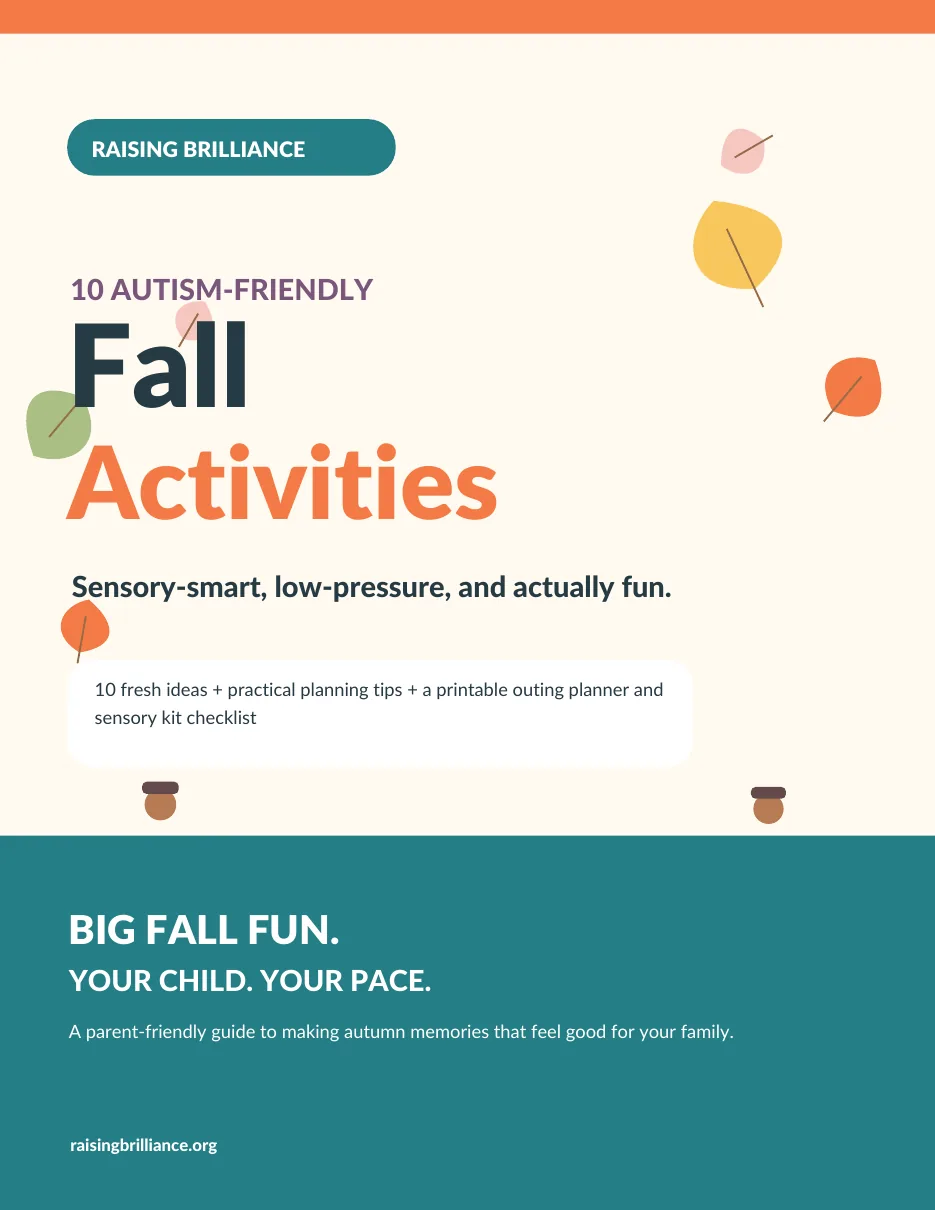
10 Autism-Friendly Fall Activities — free PDF, downloaded instantly.
No spam. Unsubscribe any time.
Why rankings are misleading
Search "best states for autism" and you'll find a dozen confident lists, most of them published by therapy companies. Treat them skeptically. "Best" depends entirely on your situation — your child's age, whether you rely on Medicaid or private insurance, whether you need a strong school district or robust adult services, and even which county you live in. Services often vary as much within a state as between states.
State policy also changes constantly. Waiver waitlists open and close, legislatures amend insurance rules, and funding shifts year to year. Any ranking is a snapshot that starts going stale the day it's published. So instead of trusting a list, learn to evaluate a state yourself. This guide gives you the factors that matter and points you to your own state's page — every U.S. state has a hub on this site with local specifics.
Factors that actually matter
When people say a state is "good for autism," they're usually pointing at some mix of these:
- Medicaid waiver access and waitlists. Home- and community-based services (HCBS) waivers fund therapies, respite, and support — but many states cap enrollment and maintain long waiting lists. A generous waiver with a 10-year wait helps no one now. This is often the single biggest differentiator between states.
- Autism insurance mandate and ABA coverage. All 50 states now have some form of autism insurance mandate requiring many private plans to cover autism treatment, but the details differ — age caps, dollar caps, and which plans are covered. (Self-funded employer plans are governed by federal law, not state mandates, so a strong state mandate may not reach your specific plan.)
- School funding and choice. Strong special-education funding, and in some states an ESA or scholarship program, can change a family's options. See our guides on autism scholarships and best schools for autism.
- Provider density. A great mandate is worthless if there are no BCBAs, speech-language pathologists, or diagnosticians near you. Rural areas struggle here regardless of state policy.
- Early intervention quality. Every state runs an IDEA Part C early-intervention program for children under 3, but their reach and wait times vary widely.
- Adult services. Autism is lifelong. States differ enormously in day programs, employment support, housing, and what happens at the "services cliff" when a young adult ages out of school.
A state can look great on one factor and poor on another. Weigh them against what your family actually needs.
States commonly cited as strong
The states below come up repeatedly in published rankings and advocacy discussions by the factors above — this is not a definitive ranking, and you should verify current specifics for your situation before drawing conclusions.
- Massachusetts — frequently cited for its insurance mandate, provider density, and school supports. (Massachusetts hub)
- Colorado — often noted for early intervention and a growing provider base. (Colorado hub)
- New Jersey — commonly highlighted for comprehensive private-insurance coverage of ABA. (New Jersey hub)
- Connecticut and Pennsylvania — regularly appear on strong-support lists for services and school programs. (Connecticut, Pennsylvania)
- California — often cited for a broad entitlement framework through its Regional Center system, though provider access and waits vary heavily by region. (California hub)
- Wisconsin — sometimes noted for its Medicaid and long-term-support structure. (Wisconsin hub)
Two states get singled out specifically for short or absent waiver waitlists:
- Arizona is frequently cited for not running a separate long developmental-disabilities waiver waitlist — it folds DD services into its ALTCS/AHCCCS long-term-care Medicaid program, so eligible children generally aren't parked on a years-long list. (Arizona hub)
- North Dakota is often mentioned for relatively short waits and a State Plan approach to many DD services. That said, North Dakota does maintain an autism-spectrum-disorder waiver that has had a waiting list (a modest one by national standards in recent reporting), so "no waitlist" overstates it — verify the current status. (North Dakota hub)
Because these reputations shift, confirm the current picture with the state's Medicaid or developmental-disabilities agency before relying on any of it.
Waitlists: the hidden dealbreaker
A state can have generous programs on paper and still leave your family waiting years. National data bears this out: analyses of Medicaid HCBS waiting lists have found that waits grew in many states in recent years, with a majority reporting increases and a number opening new waiting lists. States without a waitlist for a given waiver are the exception, not the rule.
When you evaluate a state, ask the local DD agency directly: Is there a waitlist for the waiver my child would use? How long is it? Is it first-come or needs-based? A short answer here tells you more than any ranking.
Should you move for services?
For most families, no — or at least not lightly. Moving is expensive and disruptive, it resets you at the back of any new waitlist, and eligibility often depends on establishing residency first. The gains are frequently smaller than they look, because the thing you actually need (a nearby provider, a specific school program, a specific waiver slot) may hinge on your county, not your state.
If you are considering a move for services, do it with eyes open: confirm the specific program and its waitlist, confirm providers exist where you'd actually live, and confirm how residency and re-application work before you commit. Talk to local parent groups and your would-be state's Parent Training and Information Center first.
Check your own state
The most useful thing you can do isn't picking a "best" state — it's knowing yours. Every state has a hub on this site covering local diagnosis, therapy, school, and funding specifics. Start with your own: browse all state guides via our locations directory, or jump to a few examples like Massachusetts, Texas, Arizona, or North Dakota.
FAQ
What state is best for autism services? There's no single answer — it depends on your child's needs, your insurance, and even your county. States like Massachusetts, Colorado, New Jersey, Connecticut, and California are commonly cited for strong support, but rankings go stale quickly and services vary widely within any state. Evaluate the factors that matter to your family rather than trusting a list.
Which states have no Medicaid waitlist for autism? Very few. Arizona is commonly cited for not running a separate long DD-waiver waitlist because it delivers services through its ALTCS Medicaid program. Most states do maintain waiting lists for at least some waivers, and those lists have been growing. Always confirm the current waitlist directly with the state's DD or Medicaid agency.
Do all states cover ABA therapy? All 50 states now have some form of autism insurance mandate, and many require coverage of ABA, but age caps, dollar caps, and which plans are covered differ by state. Self-funded employer health plans follow federal rules rather than state mandates, so coverage can vary even within one state.
Does moving to another state for autism services make sense? Usually not without careful homework. Moving resets you on any new waitlist, ties eligibility to residency, and may not deliver the local provider or school program you actually need. If you're considering it, verify the specific program, its waitlist, and nearby providers before committing.
Which states have the strongest autism insurance laws? New Jersey is frequently cited for comprehensive private-insurance coverage of ABA, and states like Massachusetts and California come up often too. But "strongest law" doesn't guarantee your plan is covered, since federal law governs self-funded employer plans — check your own policy's benefits directly.
How do I find services in my state? Start with your state's page in our locations directory, contact your state's Parent Training and Information Center, and call your local Medicaid or developmental-disabilities office to ask about waivers and waitlists.
Related guides
See autism scholarships and best schools for autism for education funding and options, and browse your own state in our locations directory — for example Massachusetts, Colorado, New Jersey, Arizona, or Texas. If housing is part of the picture, our guide to autism housing grants covers home safety modifications, rental vouchers, and home repair programs.
Raising Brilliance is a free weekly newsletter and resource for families raising autistic children — practical, calm, and respectful of autistic people. Join over 1,000 families.
This guide is general information, not legal or financial advice. State programs, waivers, and insurance rules change often — verify current specifics with your state's Medicaid or developmental-disabilities agency and your own insurance plan.
Related guides
ABLE Account vs. Special Needs Trust: Which Does Your Family Need?
They solve different problems — and most autism families eventually use both. Here's how to decide what to set up first.
ABLE Accounts for Autism Families: The Complete Guide
What an ABLE account is, who qualifies after the 2026 expansion, what it can pay for, and how to pick your state's plan.
ABLE Accounts for Hawaii Families: A Parent's Guide
How Hawaii families can save for an autistic child's future without risking SSI or Med-QUEST.
ABLE Accounts for Idaho Families: A Parent's Guide
Idaho has no state ABLE program — here's how Idaho families open one anyway, at partner-state rates.
ABLE Accounts for North Dakota Families: A Parent's Guide
North Dakota has no state ABLE program — here's how ND families open one anyway.
Find this near you
Browse local autism resources by topic and find providers and programs in your city.
Get our free fall activities guide
10 autism-friendly fall activities, each with who it suits and how to make it work, plus an outing planner. Free PDF, downloaded instantly.
No spam. Unsubscribe any time. Join 2,000+ parents on the list.