Noise-Cancelling Headphones for Autism: A Parent's Buying Guide (2026)
Quick answer
Passive ear defenders vs. active noise-cancelling — honest picks by age and use-case, and how to introduce them without making sound sensitivity worse.
Get our free fall activities guide
10 autism-friendly fall activities, each with who it suits and how to make it work, plus an outing planner. Free PDF, downloaded instantly.
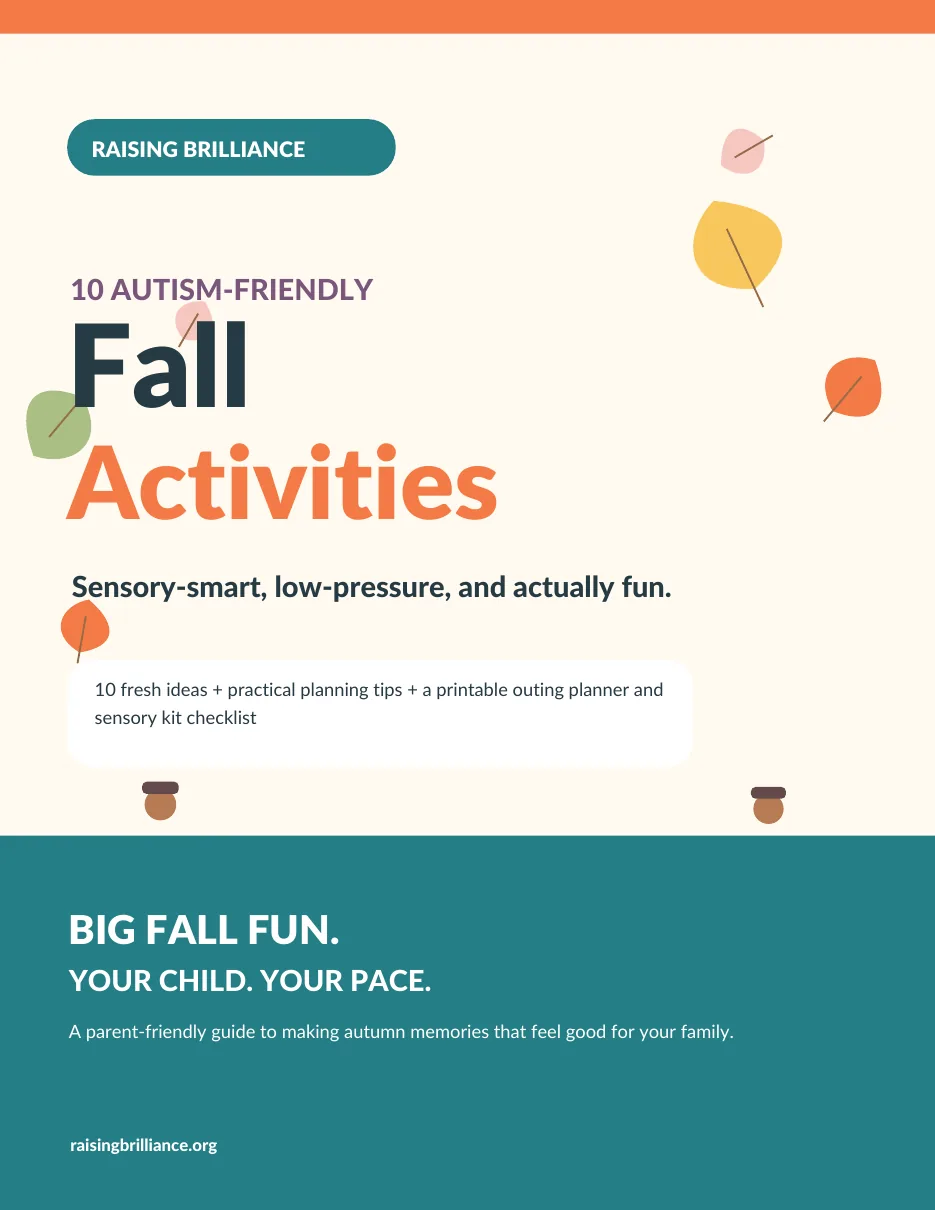
10 Autism-Friendly Fall Activities — free PDF, downloaded instantly.
No spam. Unsubscribe any time.
This guide contains some affiliate links. If you buy through them, Raising Brilliance may earn a small commission at no extra cost to you. Our picks are chosen editorially — no brand pays for a place on this list.
Why sound sensitivity matters
For a lot of autistic children, sound isn't just louder — it's sharper, less predictable, and much harder to tune out. A hand dryer, a school assembly, a busy supermarket, the scrape of chairs across a classroom floor: input most people filter out automatically can feel genuinely painful or frightening. Sound sensitivity — sometimes called auditory hypersensitivity or hyperacusis — is one of the most common sensory differences in autism, and it's a frequent trigger for meltdowns and shutdowns.
Noise-reducing headphones and earplugs give a child a way to turn the volume of the world down to something they can cope with. Used at the right moments, they can be the difference between a child managing a noisy place and being overwhelmed by it. This guide walks through the two main types, honest picks for different ages and situations, how to choose, and how to introduce them without making things worse.
An honest word before you buy
Headphones are a tool, not a fix. They help a child cope with a noisy environment; they don't change how that child's nervous system processes sound, and they are not a treatment for autism. It's worth being clear about that before you spend money, because a lot of product pages are not.
There's also a real downside to overuse. If a child wears noise-reducing headphones all day, every day, some occupational therapists worry it can backfire — the ears grow used to a quieter baseline, ordinary sounds start to feel louder by comparison, and the child leans on the headphones more instead of gradually building tolerance. Constant use can also get in the way of conversation, listening, and connection.
None of that means "don't use them." It means use them intentionally — for the hard moments and the genuinely loud places, not as a default setting for life. If your child has significant sensory needs, an occupational therapist can help you fold headphones into a wider plan rather than relying on them alone; our guide to sensory toys and tools covers that bigger picture. Think of headphones as one item in the toolkit, alongside quieter environments and other supports.
Passive vs. active: which does your child need?
There are two very different products people mean by "noise-cancelling headphones," and the difference matters.
Passive ear defenders (earmuffs) and earplugs physically block sound. No electronics, no batteries, nothing to charge. Earmuffs are rated with an NRR (Noise Reduction Rating) — a rough measure, in decibels, of how much sound they block. They're the mainstay for autistic kids: simple, durable, nothing to break, and they work the instant they go on. The trade-off is that they muffle everything, including speech, and can feel warm or heavy over a long day.
Active noise-cancelling (ANC) headphones are electronic. Tiny microphones listen to the outside world and generate an opposite sound wave to cancel steady background noise — engine hum, air conditioning, crowd rumble. They suit older kids and teens who tolerate over-ear headphones and want to listen to music or quiet, especially for travel. The catch: they need charging, they cost more, ANC works best on constant low-frequency noise (less so on sudden sounds), and for children you have to watch the listening volume.
A rough guide:
- Toddlers and younger kids, or any child who won't tolerate electronics: passive earmuffs.
- School, meltdowns, sudden loud events (fireworks, hand dryers, assemblies): passive earmuffs or earplugs — instant, reliable, nothing to fail.
- Older kids and teens who want music or quiet, and travel (planes, long car trips): ANC headphones, ideally volume-limited.
- Teens and adults who want something discreet: filtered earplugs (Loop, Vibes, Flare Calmer) rather than bulky earmuffs.
Many families end up with more than one — earmuffs in the school bag, earplugs for the older sibling, a set of ANC headphones for flights.
Top picks by age and use-case
These are real, current products that come up repeatedly in autism and OT communities. Prices are approximate and change often, so check before you buy.
Babies and toddlers (roughly 0–3)
Alpine Muffy Baby — Who it's for: infants and toddlers up to about 36 months. Why: low-clamp, lightweight earmuffs with no hard pressure point on soft skulls, CE and ANSI certified, often recommended for fireworks, sporting events, and noisy family outings. Downside: babies outgrow them, and some pull them off. Approx price: $25–30. Where to buy.
Baby BANZ Earmuffs — Who it's for: newborns through toddlers (an adjustable headband fits up to about 36 months), with a 2+ "Kidz" size above that. Why: NRR 26 dB, soft cushioned cups, lightweight (around 140 g), a brand parents have trusted for years. Downside: pricier than basic muffs. Approx price: $40–43. Where to buy.
Younger kids (roughly 3–10)
Alpine Muffy Kids — Who it's for: ages roughly 3–16, school and everyday use. Why: 25 dB reduction, a discreet low-profile shape (less "look at me" than big industrial muffs), adjustable, and comfortable enough for longer wear; a common classroom choice. Downside: the headband can feel snug on bigger heads at the top of the range. Approx price: $26. Where to buy.
3M Peltor Kids / 3M Kids Hearing Protection — Who it's for: kids who are hard on their gear, and tight budgets. Why: NRR 22–23 dB, genuinely tough, and inexpensive. Downside: a bit bulkier and less "designed for kids" in looks. Approx price: $16–26. Where to buy.
Snug Kids Earmuffs — Who it's for: families wanting a low-cost, colorful adjustable muff. Why: around 25 dB, foldable, lots of colors, and one of the most affordable adjustable options. Downside: build quality is fine but not premium. Where to buy.
Older kids and teens
Loop Quiet 2 — Who it's for: older kids, teens, and adults who find earmuffs too obvious or too hot. Why: soft reusable silicone earplugs, up to 24 dB (SNR), discreet, with multiple ear-tip sizes; widely used by autistic people for everyday noise. Downside: small parts (mind younger children), and some kids dislike anything in the ear canal. Approx price: $25. Where to buy.
Loop Engage 2 — Who it's for: social situations where a teen still needs to follow conversation. Why: takes the edge off (about 16 dB SNR) while keeping speech clearer than a full plug — good for classrooms, family gatherings, and busy places. Downside: less blocking than Quiet, so not for the loudest environments. Approx price: $35. Where to buy.
Puro Sound PuroQuiet Plus — Who it's for: kids and tweens who want ANC over-ear headphones and music. Why: active noise cancelling plus a built-in 85 dB volume limit, so a child can't push the volume to unsafe levels; lightweight, long battery, and certified sensory-inclusive. Downside: an on-ear fit suits some kids better than others, and it's a real investment. Approx price: $140. Where to buy.
JLab JBuddies ANC — Who it's for: a more affordable kid-sized ANC option. Why: active noise cancelling with an 85 dB volume-safe limit, works wired or wireless, and long battery life. Downside: sound quality and ANC strength are modest next to premium adult sets. Where to buy.
Teens and adults
Sony WH-1000XM5 — Who it's for: teens and adults who want strong, "set it and forget it" noise cancelling for travel, focus, or overwhelming places. Why: among the best ANC available, very effective on steady background noise, comfortable over-ear cushions, long battery. Downside: premium price, and there's no built-in child volume limit, so it isn't the right pick for younger kids. Approx price: $250–400 (often discounted). Where to buy. The cheaper Sony WH-CH720N (around $150) uses similar noise-cancelling tech at a lower price and is widely available if the XM5 is out of budget.
Flare Calmer — Who it's for: teens and adults who don't want to reduce volume, just take the harshness out of sound. Why: tiny silicone in-ear inserts that reshape mid-range frequencies (about 2–8 kHz) to lower the stress response to noise, without muffling speech or music; discreet and inexpensive. Downside: they don't lower overall volume, so they aren't hearing protection for genuinely loud settings. Approx price: $25. Where to buy.
Vibes Hi-Fidelity Earplugs — Who it's for: older kids, teens, and adults who want to dial sound down evenly without losing clarity. Why: lower the volume of everything by about 22 dB while keeping speech and music clear, nearly invisible, and come with three tip sizes and a case. Downside: in-ear, and less total blocking than a foam plug or earmuff. Approx price: $28. Where to buy.
How to choose
A few things matter more than marketing:
NRR and dB-limiting are different jobs. NRR tells you how much sound a passive earmuff or plug blocks. A volume limit (like Puro's or JLab's 85 dB cap) is about how loud a headphone can play music — hearing protection for kids who listen to audio. Know which one you actually need.
Fit and comfort decide everything. The best-rated headphones are useless if your child won't keep them on. Look for adjustable headbands, soft cushions, and low clamping pressure. For many sensory-sensitive kids, a snug-but-gentle fit is the whole game.
Weight. Lighter is better for small heads and longer wear. Heavy industrial muffs can become their own sensory problem.
Over-ear muffs vs. earplugs. Some kids can't stand anything in the ear canal and do far better with over-ear muffs; others find muffs hot and heavy and prefer discreet plugs. This is individual — if you can, let your child try both.
Durability. Kids' gear gets dropped, stepped on, and thrown into bags. Simpler passive muffs usually survive this better than electronics.
Budget. You do not need to spend a lot. A $16 pair of 3M kids' muffs protects hearing as well as anything. Save the ANC investment for a child who specifically wants music and will actually use it.
How to introduce them
A new object clamped over the ears can itself be overwhelming, so introduce headphones gently:
- Start in a calm, familiar place — not in the middle of the overwhelming event you bought them for.
- Keep first sessions short. A minute or two counts as a win. Build up slowly.
- Let your child explore them first — hold them, look at them, put them on you.
- Let them help choose and decorate. A favorite color or a couple of stickers turns "a thing being put on me" into "my headphones."
- Model it. Wear a pair yourself so it looks ordinary and safe.
- Pair them with relief. If they go on just before a predictably hard moment and things feel better, your child learns that the headphones help.
- Never force them on. For a sensory-sensitive child, forcing the issue can create a lasting aversion. Go at their pace.
When not to use them
Headphones aren't always the right call:
- Not all day, every day. Reserve them for genuinely loud or overwhelming situations so your child keeps building tolerance to ordinary sound.
- Not where hearing matters for safety — near roads, in parking lots, anywhere your child needs to hear warnings.
- Not as a substitute for a better environment. If a setting is regularly overwhelming, reducing the noise itself — a quieter corner, a break, leaving early — often beats masking it.
- Not instead of professional input if sound sensitivity is severe or getting worse. An OT or audiologist can rule things out and tailor a plan.
Frequently asked questions
Are noise-cancelling headphones good for autism? For many autistic children, yes — used at the right moments they reduce sound overload and help a child cope with noisy places. They are a support, not a cure, and they work best used intentionally rather than constantly.
What NRR should I look for? For most everyday situations, an NRR in the low-to-mid 20s dB is plenty; kids' earmuffs typically fall around 22–26 dB. Higher isn't always better — you usually want to take the edge off sound, not seal a child off from the world entirely.
Are they safe for toddlers and babies? Yes, with earmuffs designed for that age (like Alpine Muffy Baby or Baby BANZ), which use low clamping pressure and a light headband. Avoid earplugs for babies and toddlers — small parts are a choking risk and they don't fit tiny ear canals.
Will headphones make my child more sensitive to sound over time? They can, if worn constantly. The ears adjust to a quieter baseline, and ordinary sound can then feel louder. Using them for specific hard moments rather than all day helps avoid this — and it's a good reason to involve an OT.
Passive earmuffs or active noise-cancelling — which is better? Neither is universally better. Passive earmuffs are simpler, cheaper, tougher, and better for young kids and sudden loud events. ANC headphones suit older kids and teens who want music or steady quiet, especially for travel.
Are ANC headphones safe for kids' hearing? The noise-cancelling part is fine. The risk is volume when playing audio, so for children choose a volume-limited set (such as Puro or JLab) that caps output around 85 dB.
Will school let my child wear them? Usually yes, and it can be written into an IEP or 504 plan as a sensory accommodation. A discreet, low-profile pair — or filtered earplugs for older students — tends to go over best in the classroom.
My child won't keep them on — what now? Go slower: short sessions, let them decorate the pair, model wearing them yourself, and never force it. If earmuffs don't work, some kids do far better with earplugs, or the other way around.
Related guides
See also our guide to sensory toys and tools for the wider picture on regulation, autism-friendly activities for handling noisy outings, and the first 100 days after an autism diagnosis if you're just starting out. For sensory-friendly places near you, browse our sensory-friendly activities hub.
Raising Brilliance is a free weekly newsletter and resource for families raising autistic children — practical, calm, and respectful of autistic people. Join over 1,000 families.
Know of a product that's helped your child? Tell us.
Related guides
Autism and Diet: An Evidence-Based Guide
Food selectivity, GI issues, celiac, the GFCF diet, and supplements — what the evidence actually says.
Autism and Puberty: A Parent's Guide
How puberty can land differently for autistic children — and what helps families navigate it.
Autism Elopement Safety: A Parent's Guide
About half of autistic children will leave a safe place without warning at some point. How to build a safety system that works.
Best Gifts for Autistic Kids: A Sensory-Smart Guide (2026)
How to choose a gift that fits a child's sensory profile and interests — with honest picks, real caveats, and the things worth skipping.
Free Stuff for Autistic Kids: What's Actually Free
Verified free items, devices, training and supplies — plus the widely recommended ones that are not free, and the one that is out of stock.
Find this near you
Browse local autism resources by topic and find providers and programs in your city.
Get our free fall activities guide
10 autism-friendly fall activities, each with who it suits and how to make it work, plus an outing planner. Free PDF, downloaded instantly.
No spam. Unsubscribe any time. Join 2,000+ parents on the list.